Why You Always Wait Longer for the Bus Than the Timetable Says
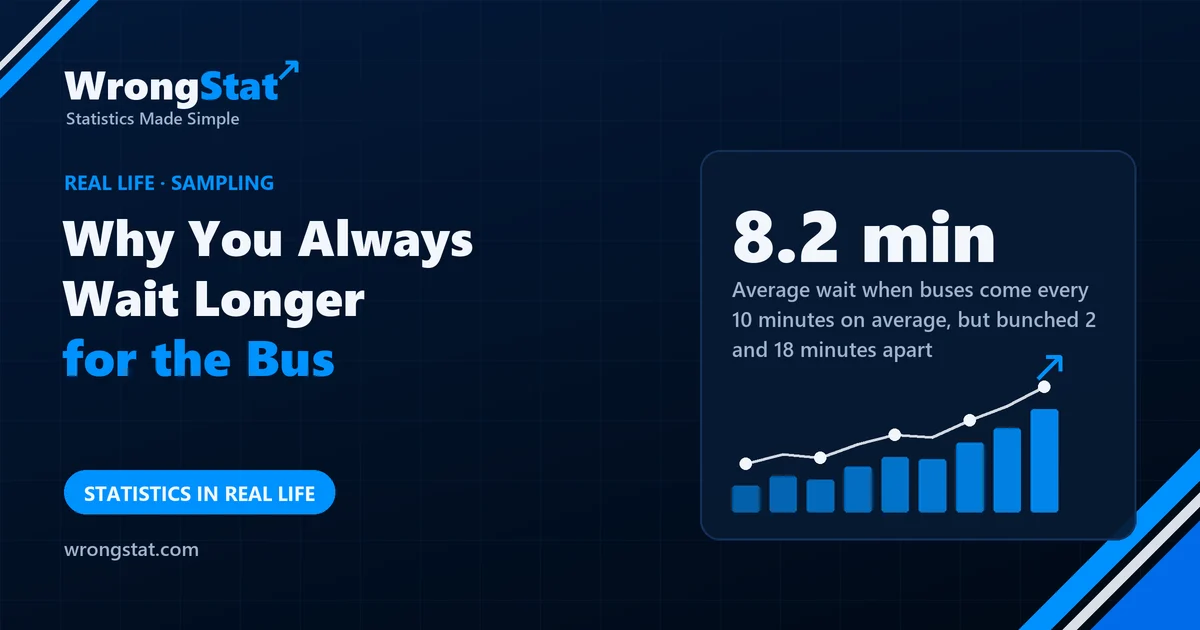
The short version: if buses come every 10 minutes like clockwork, the average wait is 5 minutes. But if they bunch, arriving alternately 2 and 18 minutes apart, the average gap is still 10 minutes, while the average passenger waits 8.2 minutes, because 90% of passengers turn up during the long gaps. The bus company averages over buses; you live the average over passengers. It's called the inspection paradox, and it's why your classes, gyms and trains always feel fuller than the official average.
Grandpa Frank catches the Number 7 into town every morning. The timetable says "every 10 minutes". The bus company's annual report says the average gap between buses is exactly 10 minutes and the average wait is therefore 5 minutes, and gives itself a commendation.
Grandpa has been timing his waits with an egg timer. His average is 8 minutes. He wrote to the company. The company replied that its figures were correct, that his experience was not representative, and that complaints about waiting times must be submitted within 5 minutes of the wait.
Buses that come in pairs
Buses bunch. A bus that falls a little behind picks up more passengers, which slows it further, while the bus behind finds empty stops and catches up. Soon they travel together. Say the Number 7s arrive alternately 2 minutes and 18 minutes apart.
- Average gap between buses: (2 + 18) / 2 = 10 minutes. The timetable is right.
- But out of every 20 minutes, 18 are inside a long gap. If you turn up at a random moment, there's a 90% chance you've arrived during the long one.
- Average wait for a passenger: 8.2 minutes, not 5.
Nobody is lying. The company averages over buses, and each gap counts once. Passengers average over themselves, and long gaps collect far more passengers, so they count far more. Grandpa isn't unrepresentative. He's a passenger.
Average wait for a passenger, buses every 10 minutes on average
The inspection paradox
This is called the inspection paradox: when you sample something by bumping into it, you're more likely to land in the big ones. It's a cousin of the friendship paradox, and it turns up everywhere.
- Class sizes. A college runs nine classes of 10 students and one lecture of 210. Average class size: 30. But 210 of the 300 students are in the big one, so the average student sits in a class of 150. The prospectus says 30. The students say "huge". Both are averages.
- Gyms and trains. The gym is always busy when you go, because busy times are when most people, including you, go.
- Queues. The supermarket's average queue is short, measured across the day. Your average queue is long, because you shop when everyone does.
Which average are you looking at?
Neither average is wrong. They answer different questions. "How far apart are the buses?" is a question about buses. "How long will I wait?" is a question about passengers. A report that answers the first and implies the second is using the wrong sample for the claim.
How to spot the inspection paradox
1. Ask what was counted. Buses or passengers? Classes or students? Trains or travellers?
2. Ask whether big ones catch more people. If longer gaps, bigger classes or busier hours collect more of the people experiencing them, the experienced average will be higher.
3. Measure from your side. If you want to know your wait, time your waits, like Grandpa. That's the number that matters to you.
Where it costs you money
"The average holding period is ten years" can be true across stocks while most of your money sits in the few that churn, or the other way round. "The average fund returns 7%" averages across funds, not across the money in them: the big funds that most people actually own can do better or worse. Always check whether an average is per item or per dollar.
The moral
Grandpa sent the company his egg-timer data. The company formed a working group, which met at the bus station and timed its own waits. Its average was 8.2 minutes. The working group concluded that its own experience was not representative, thanked itself for its time and caught the next bus, which came two minutes later, followed immediately by another one, both full.
The Number 7 and its timetable are illustrative; the 2 and 18 minute gaps are a simplified example of bus bunching. Educational content, not financial advice.