Is a Gym Membership Worth It? How Kevin Got Fit Without Exercising
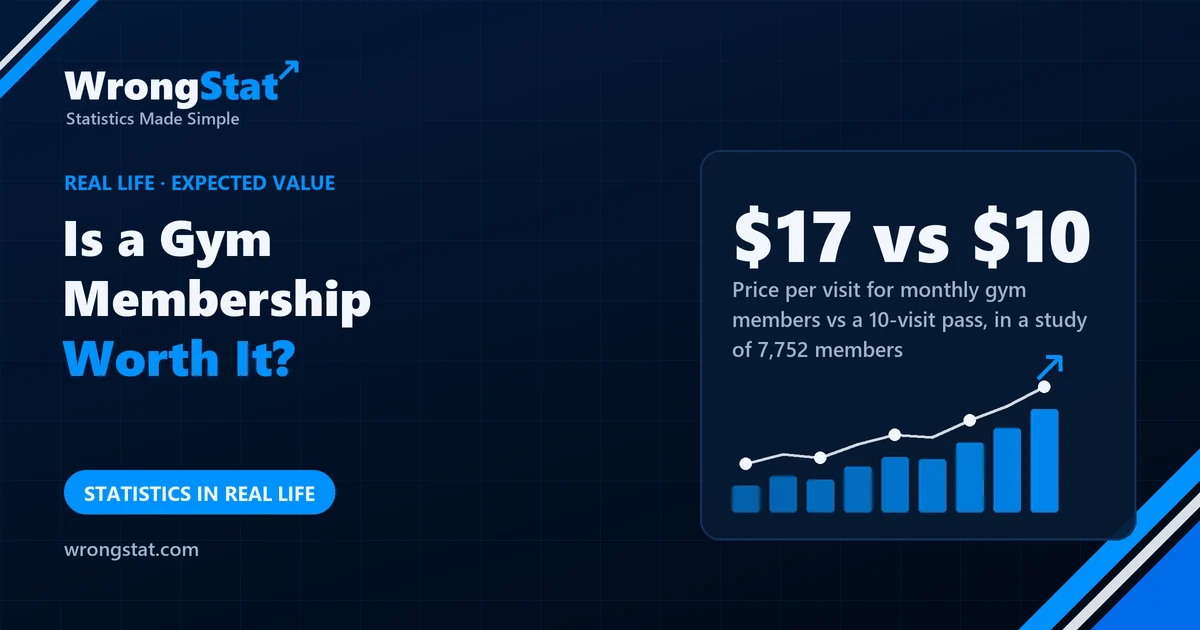
The short version: in a study of 7,752 members of three US health clubs, people on monthly contracts over $70 went to the gym about 4.3 times a month. That's more than $17 a visit, when a 10-visit pass cost $10 a visit: about $600 lost per membership. People price the membership by how often they plan to go, not how often they actually go. To check yours, divide what you paid in the last three months by the visits you actually made.
On the second of January, cousin Kevin joined a gym. The membership was $75 a month, which he calculated was a bargain: he would go three times a week, twelve times a month, so each visit would cost $6.25. He also bought a smartwatch, a water bottle with motivational markings and a pair of trainers that he described as "an investment".
He felt fitter immediately. The smartwatch agreed. By the end of the year Kevin had paid $900, visited the gym eleven times and received a badge from the app for "consistent commitment".
What 7,752 gym members actually did
Kevin is not unusual. He's the average. Two economists, Stefano DellaVigna and Ulrike Malmendier, got the records of three US health clubs: 7,752 members over three years, with both the contract each person chose and every visit they made. They published the results in 2006 in the American Economic Review under the title "Paying Not to Go to the Gym".
- Members on monthly contracts costing over $70 went on average 4.3 times a month.
- That works out at more than $17 per visit.
- The same clubs sold a 10-visit pass at $10 per visit.
- The typical monthly member would have saved about $600 over their membership by paying per visit.
Nobody forced these people into the wrong contract. They chose it, because when they chose it, they were pricing the membership for the person who would go twelve times a month. That person never turned up. The bill did.
Price per gym visit, in dollars
The price of the person you plan to be
The value of a membership is the price divided by the visits. The trap is which visits you divide by. Kevin divided by the visits he planned. The right number is the visits he will actually make, and the best guess for that is the visits people like him actually made. That's expected value: the average of what really happens, not the best case.
- Kevin's plan: $75 / 12 visits = $6.25 a visit.
- The study's average member: $75 / 4.3 visits = $17.44 a visit.
- Kevin's actual year: $900 / 11 visits = $81.82 a visit, which is roughly the price of a personal trainer who would also have shouted at him.
A forecaster who says "12 visits" and delivers 4.3 is badly calibrated. Most of us are, about ourselves, and always in the same flattering direction.
Why the gym's numbers all look great
At the end of the year, the gym announced record membership, record revenue and record engagement in its app. Kevin's smartwatch reported his best ever resting heart rate, which it achieved mostly by resting. Every number was true. None of them measured exercise.
The gym counts sign-ups because sign-ups pay the bills. The app counts opens because opens are easy to count. The watch counts steps, including the 400 between the sofa and the fridge. When the measurable thing becomes the target, it slides away from the thing you actually wanted, which is Goodhart's law wearing a sweatband.
Is your membership worth it? A two-minute check
1. Count, don't remember. Look up your actual visits for the last three months. Most gym apps and bank statements will tell you.
2. Divide. Three months of fees divided by those visits is your real price per visit.
3. Compare with paying per visit. If a pass or a drop-in fee is cheaper per visit than your real price, the membership is costing you money. Decide by what you did, not by what you will definitely do starting next Monday.
Where it costs you money
The same arithmetic applies to every subscription bought for a future self: the streaming service for the documentaries, the language app, the premium trading platform for the analysis you'll do at weekends. Value them by the use you can show, not the use you intend. And when you plan to invest a fixed amount every month, check a year later how many months you actually did. Plans are a forecast, and forecasts get tested.
The moral
Kevin cancelled the membership in January, after the check above showed him $81.82 a visit. He bought a 10-visit pass instead, at $10 a visit. It expired in June with seven visits unused, for a real price of $33.33 a visit. Kevin has concluded that the problem is the gym, and is researching home equipment. He has found an exercise bike that, he says, will pay for itself.
Study figures are from DellaVigna and Malmendier (2006), covering three US health clubs; prices and habits elsewhere differ. Kevin and his numbers are illustrative. Educational content, not financial advice.