Real life · Streaks and probability
How Many Bad Days in a Row Before the Universe Is Against You?
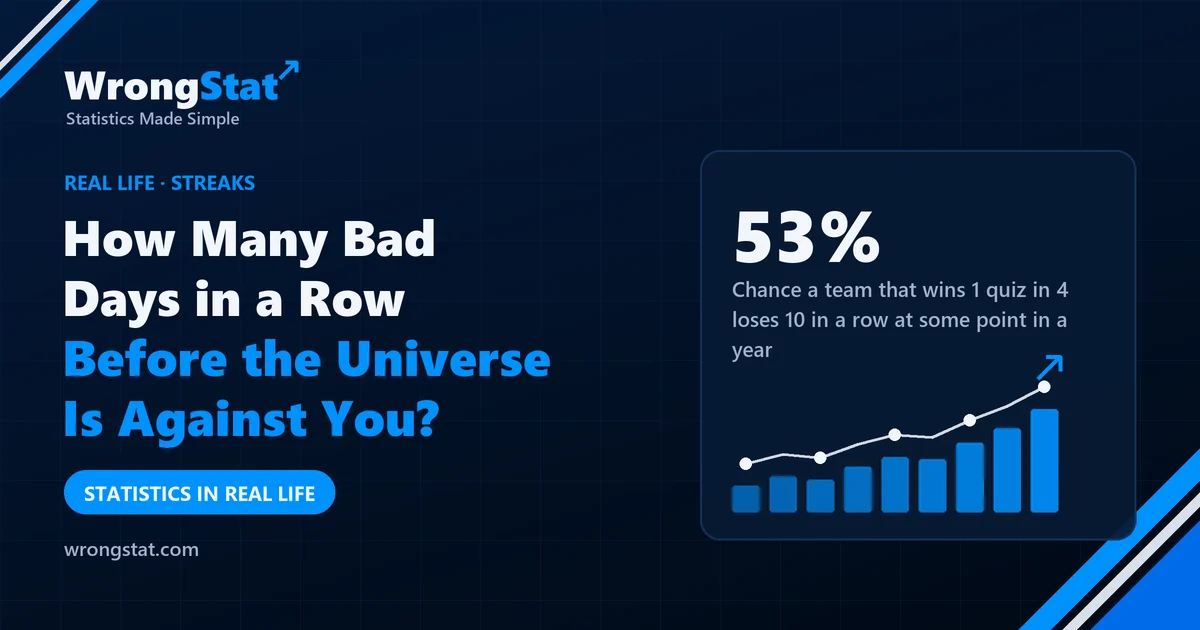
The short version: five bad days in a row, starting on one particular day, is a 1 in 3,125 event. But a year has 365 chances for a streak to start, and over a year it happens to almost 1 in 11 people. Rare events become normal when you give them enough chances.
Uncle Gary's pub quiz team, The Usual Suspects, wins about one quiz in four. Then they lost ten weeks in a row.
Gary has concluded that the quizmaster is against them. Aunt Linda thinks it's the new barman. Kevin has started wearing a lucky hat, which hasn't helped the team but has helped the barman, who finds it hilarious.
So we did the maths. Nobody is against them.
The numbers
Let's say one day in five goes badly for you, and each day is independent: yesterday's disaster doesn't change today's odds. What are the chances of five bad days in a row?
- Starting on one particular day: 0.2 × 0.2 × 0.2 × 0.2 × 0.2 = 1 in 3,125. Very rare.
- At some point in a whole year: 8.9%, almost 1 in 11. Not rare at all.
The difference is the number of chances. Each of the 365 days is a new starting line for a streak. It's the birthday paradox again: a small chance, tried many times, becomes likely.
| Streak | Chance it happens at some point |
|---|---|
| 4+ bad days in a row in a year (1 day in 5 is bad) | 37% |
| 5+ bad days in a row in a year | 8.9% |
| 6+ bad days in a row in a year | 1.8% |
| The Usual Suspects losing 10+ quizzes in a row in a year (they win 1 in 4) | 53% |
| The same team losing 8+ in a row in a year | 79% |
| 6+ heads or tails in a row in 100 coin flips | 81% |
The Usual Suspects' ten-week losing streak was more likely than not. A team that wins one quiz in four should expect something like it every year.
Same streak, different number of chances
The trap: "We're due a win"
After nine losses, Gary announced that the team was due a win. It wasn't. If each quiz is independent, the chance of losing the tenth was the same 75% as always. Streaks don't build up credit with the universe. Believing they do has a name: the gambler's fallacy, and casinos are very grateful for it.
Where it costs you money
A trading strategy that wins 40% of its trades will have long losing streaks, even if it's a perfectly decent strategy. People quit decent strategies in the middle of normal streaks, and stick with bad ones because "a win is due".
Before you judge a run of bad luck, ask how many chances it had to happen. Usually the answer is: plenty.
The moral
A long streak feels like a message. Mostly it's arithmetic. The Usual Suspects won the following week. Kevin credits the hat.
Assumes each day (or quiz) is independent, with a fixed chance of going badly: 1 in 5 for days, 3 in 4 for Gary's quiz team. Real life is messier, but the point stands. Educational content, not financial advice.